Key Takeaways
- ✓Henderson leads in master-planned residential and mixed-use land, with strong demand from national homebuilders.
- ✓North Las Vegas dominates industrial and logistics land, driven by the Apex Industrial Area and major employer relocations.
- ✓Henderson land prices per acre are generally higher, but entitlement risk is lower due to well-defined master plans.
- ✓North Las Vegas offers more raw acreage at lower price points, but infrastructure gaps can add cost and time.
- ✓Both markets have strong fundamentals — the right choice depends on your product type and hold strategy.
Two Cities, Two Very Different Land Markets
Henderson and North Las Vegas are both among the fastest-growing cities in the United States. Both sit within Clark County's broader metro area, both benefit from Nevada's tax environment and population inflow, and both have seen significant land price appreciation over the past five years. But they are not interchangeable markets. The type of land, the buyer profile, the development economics, and the entitlement environment differ substantially between the two cities.
If you're allocating capital to Clark County land in 2026, understanding those differences is the starting point for making a sound decision.
Henderson: Master-Planned, Premium, Lower Risk
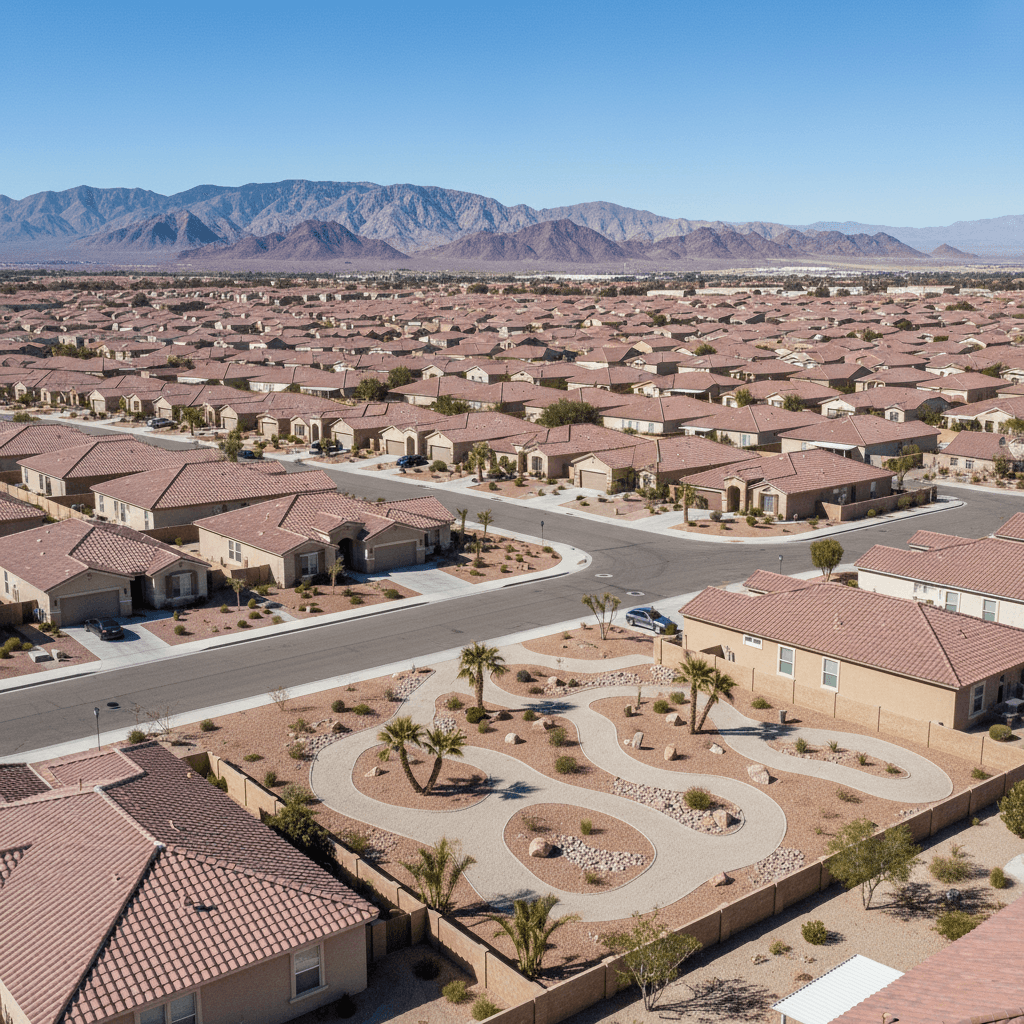
Henderson is a highly organized land market. Much of the city's undeveloped land sits within master-planned communities — large-scale developments with pre-approved infrastructure, defined land use plans, and established design standards. This makes entitlement faster and more predictable than in less planned jurisdictions.
The demand side is strong. National homebuilders including Toll Brothers, Lennar, and D.R. Horton have active operations in Henderson. The city's demographics skew older and wealthier than the metro average, which supports demand for higher-end residential product. Mixed-use and commercial land near the Union Village medical campus, the Raiders practice facility corridor, and the evolving downtown core have attracted institutional interest.
The tradeoff is price. Henderson land trades at a premium relative to the rest of the valley. Entitled residential pads in desirable Henderson master plans can command $300,000 to $500,000 per acre or more. Raw land is cheaper, but the path to entitlement still requires navigating Henderson's development code and design review process, which is thorough.
North Las Vegas: Industrial-Led, Higher Upside, More Complexity
North Las Vegas is a fundamentally different story. The city's growth engine is industrial — specifically the Apex Industrial Area, a massive swath of land north of the Las Vegas Valley that has attracted data centers, logistics facilities, and manufacturing operations from companies including Google, Switch, and Redwood Materials.
Industrial land in North Las Vegas has seen some of the strongest price appreciation in the entire metro. Sites that traded at $3 to $5 per square foot five years ago are now trading at $10 to $18 per square foot or more, depending on location and infrastructure access. The demand is real — driven by e-commerce, data center growth, and nearshoring trends that are pushing industrial development inland from coastal markets.
Outside of Apex, North Las Vegas also has significant residential land supply. The city has entitled large master plans in its northern and eastern sectors, and homebuilder demand has followed. But the residential market here skews more workforce housing than luxury, which affects pricing and absorption.
The complexity in North Las Vegas comes from infrastructure. Parts of the city — particularly in Apex — lack water, sewer, and road access. Developers who can solve infrastructure gaps at scale can create significant value, but it requires capital, time, and expertise that not every buyer has.
Which Market Makes More Sense in 2026?
For industrial developers and investors: North Las Vegas is the clear answer. The Apex corridor is one of the strongest industrial land markets in the Western United States right now, and demand shows no signs of slowing. If you can secure land with utility access or a clear path to it, the fundamentals support strong returns.
For residential developers: Henderson offers lower entitlement risk and more predictable absorption, but you'll pay for that certainty. North Las Vegas offers more raw land at lower entry prices, with upside tied to the city's continued growth — but timelines are less predictable.
For mixed-use and commercial: Henderson's established retail corridors and growing medical and sports infrastructure make it the stronger bet for most commercial product types. North Las Vegas commercial land is improving but still trails Henderson in demand depth.
The honest answer is that both markets have strong fundamentals. The right choice depends on your product type, your capital structure, your hold period, and your tolerance for entitlement complexity. If you want to talk through a specific site or acquisition thesis, reach out directly.

About Parker Gibbons
Parker Gibbons is part of the PaperLotLand team. Parker Gibbons has been buying, selling, and brokering land in the Las Vegas Valley for over 15 years. He built PaperLotLand to give developers and investors a direct, off-market channel to move land — without the delays and exposure of the public MLS.
Learn more about us →Ready to Access Off-Market Land Deals?
Join our private network of developers, brokers, and investors in the Las Vegas Valley.